October 03, 2026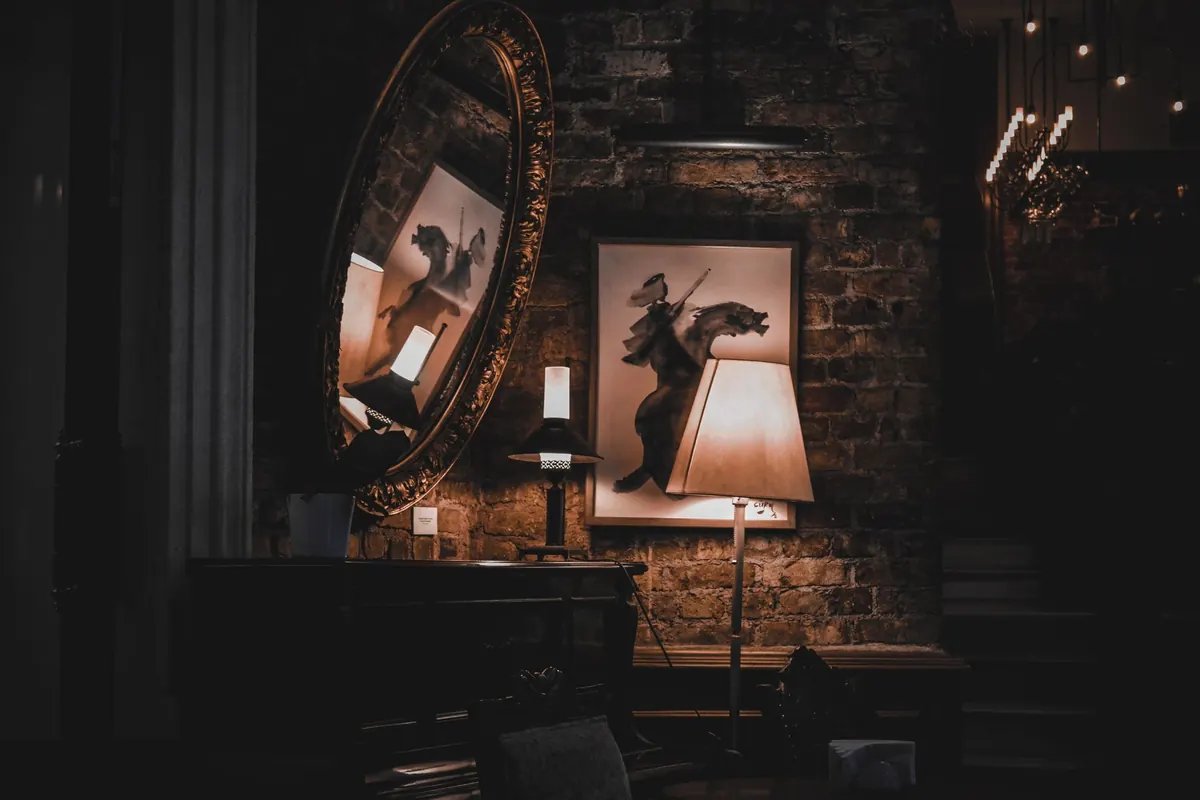
Every home has one: the alcove beside the chimney breast, the strip of hallway that never sees daylight, the corner behind the door where the ceiling light simply gives up. Paint is the obvious fix, but it is rarely the right one. A dark corner is usually a light problem wearing a colour problem's clothes — and if you rent, or live in a period house with plaster you would rather not cover, a paintbrush is off the table anyway. What follows are eight tricks that work with lamps, mirrors, plants and textiles. All of them are removable. None of them need permission.
Layer the Light, Don't Flood It
One bulb overhead makes a gloomy corner worse. It pools light on the floor, throws your own shadow across the wall and leaves the upper half of the room exactly as dark as it was.
What works instead is three small sources at different heights. A floor lamp in the corner itself, low and behind the furniture. A table lamp at about the height of your shoulder when you are sitting down, so it lights a book or a face rather than the ceiling. Then something tiny for warmth — a candle, a rechargeable table lamp, a picture light over whatever hangs on the wall.
Buy warm bulbs, around 2700K, and keep them dim. Cool white light in a dark corner reads grey and slightly clinical, which is the opposite of what you want. A dimmable bulb, or a plug-in dimmer, is worth the small expense.
Direction matters more than brightness. Point lamps at the walls rather than into the middle of the room. An uplighter tucked behind a plant turns a dead corner into two glowing walls and a soft pattern of leaf shadows. The corner looks brighter because the eye reads the lit surfaces, not the bulb.
Make Mirrors Work Harder
A mirror is only as good as what it reflects. Opposite a window, it effectively doubles the daylight in a room. Facing a blank wall or the back of a sofa, it just makes a dark corner look tidier.
In an alcove, hang the mirror on the side wall and angle it slightly towards the window, so it catches the brightest surface in the room. If the corner is deep, lean a tall mirror against the back wall instead of hanging it — you can adjust the angle and take it with you when you leave. Secure it with a strap fixed to the wall or a strip of removable putty under the base, particularly if there are children or pets about.
Glass with a bit of age — foxed, slightly grey, softly spotted — reflects light more gently than a new frameless sheet, which can read as a black rectangle once the lamps go off. If you already have a plain mirror in a dark spot, put a small lamp to one side of it. Now it has something to give back.
Choose Plants That Tolerate Shade
Green lifts a dark corner because it is the one thing in the room that is genuinely bright, even in low light. Glossy leaves catch whatever falls on them, so a plant with shine does more work than a matt one.
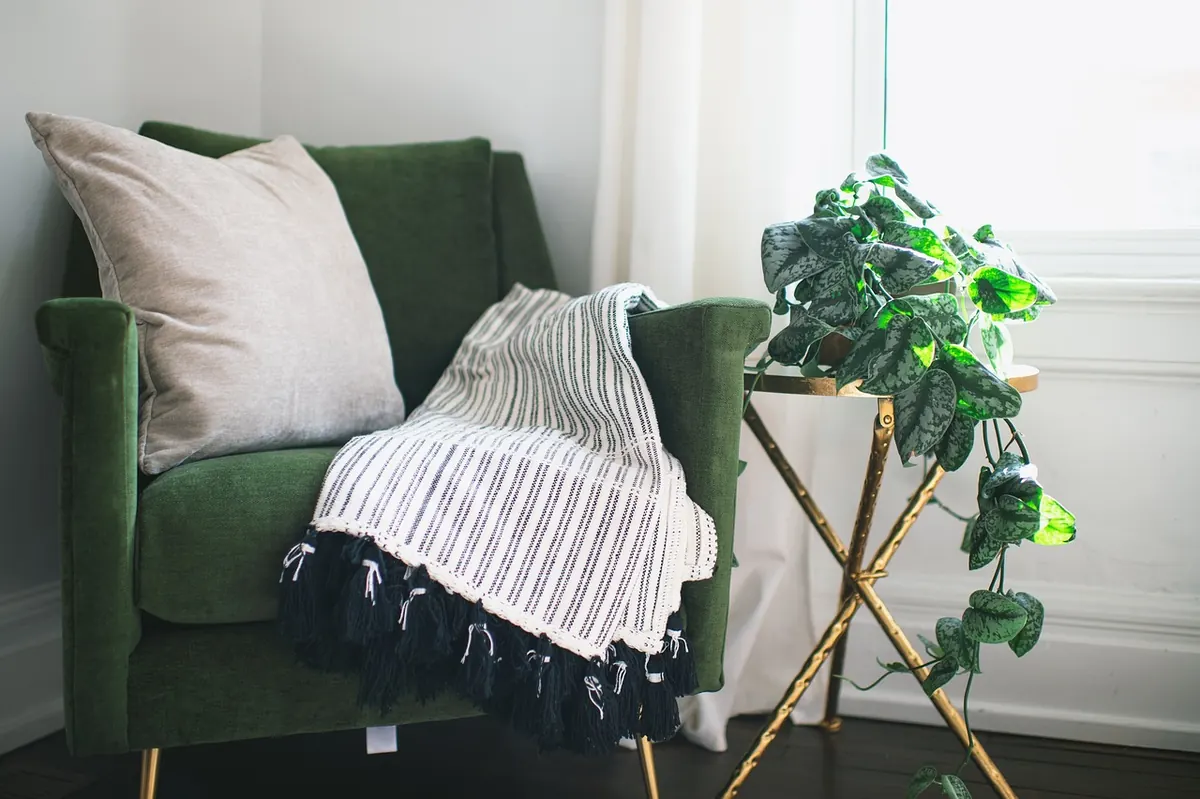
Shade-tolerant houseplants include the cast iron plant, snake plant, ZZ plant, heartleaf philodendron, spider plant and peace lily. None will grow quickly away from a window, but they will hold their shape and colour.
Three things keep them going. Wipe the leaves every few weeks with a damp cloth — dust dulls them, and dull leaves disappear into shadow. Rotate the pot a quarter turn every fortnight so new growth does not lean permanently towards the light. And water far less than you would in a bright room; compost in a dark corner stays wet for a long time, and overwatering is the usual reason a shade plant gives up.
Stand the pot on something. A plant on the floor in a dark corner is half hidden by furniture; raise it on a small stool or in a pale ceramic pot and it catches the lamplight instead.
Add Light Textiles and Pale Surfaces
Textiles change how a corner feels faster than almost anything else, and they are the cheapest thing here to change your mind about later.
Start with the lampshade. A dark or heavy shade swallows the light your lamp is producing; a pale linen, cotton or pleated paper shade spreads it. If your corner lamp wears a navy velvet shade, that alone might be the problem.
Then look at what sits in the corner. A cream or oatmeal throw over a dark armchair, a cushion, a rug with a pale ground — each gives the light somewhere to land. Avoid high-shine satin. Matte linen and slubby cotton diffuse light softly, which suits a period room and a rental flat equally well.
At the window, hang a voile panel inside the reveal rather than replacing your curtains. It softens hard daylight without blocking it, and unhooks in seconds if you rent. Save the heavy lined curtains for winter evenings, when you want the room to close in.
Finally, one or two metallic accents — a brass tray, an aged gold frame, a small copper dish — will pick up lamplight and throw it back. More than two and the corner starts to look like a shop display.
Rental and Period-Home Fixes With No Paint Involved
None of this needs a drill or a tin of emulsion. If you are in a rental, or in a listed building with walls you would rather not disturb, these are the safest options:
- Freestanding floor lamps with inline dimmers, so the light does the work and the wall stays untouched.
- Plug-in wall lights on fabric flex, hung from a removable hook rated well above the weight of the fitting.
- Leaning mirrors, secured with a removable strap or putty and angled towards the light source.
- Tension poles in an alcove for a slim shelf, a hanging plant or a rail — no fixings, no filler.
- Adhesive LED strip under a shelf or picture rail, warm white and dimmable, concealed so you see the glow rather than the source.
- Removable adhesive strips for anything light: a voile, a small textile hanging, a string of paper lanterns.
Test any adhesive on an inconspicuous patch first, and remember that old plaster and fresh paint are both more delicate than the packaging suggests.
A Five-Minute Corner Reset
If you would rather not think about it, do these four things in order and stop as soon as the corner looks better:
- Turn off the ceiling light. It is almost certainly the wrong light for this spot.
- Put one lamp in the corner and point it at the wall behind.
- Clear the darkest object out of the darkest point — a black bin, a dark chair, a bag of recycling — and put something pale there instead.
- Add one living thing: a plant, a branch in a vase, a bowl of fruit.
That is usually enough. If it is not, the corner
Photo: Erkam Hayta / Pexels