September 11, 2026
How to Create a Cosy Reading Corner in a North-Facing UK Living Room
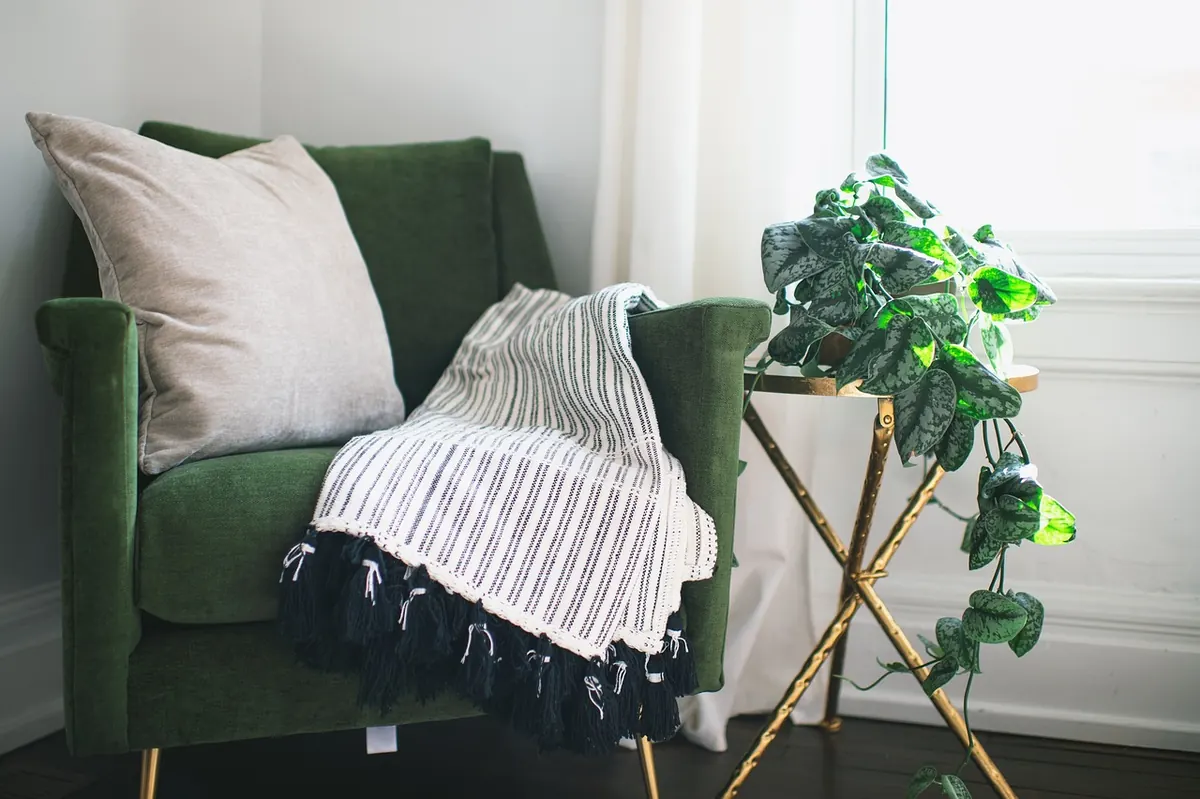
North-facing living rooms have a reputation problem. The light arrives cool and even, walls read a shade greyer than they did in the shop, and by four o'clock in November the corner by the window feels less like a retreat than a waiting room. Yet these rooms make genuinely good reading corners, precisely because they never get bright. There is no glare to dodge, no stripe of sun to chase across the page. What they need is warmth, built in small layers: a lamp in the right place, a rug your feet actually land on, and a throw you can reach without standing up.
None of it needs a builder, a big budget or a change of room. It needs you to think about light, texture and draughts, in that order. That order matters. A beautiful armchair in a cold corner will still feel unwelcoming, and a warm corner with a hard chair will still be uncomfortable. Fix the invisible things first, then dress the space.
Why north light needs a different approach
Direct sun never reaches a north-facing window, so what you get is light reflected from the sky: soft, cool and remarkably consistent through the day. That consistency is a gift for reading — no glare bouncing off the paper, no shifting brightness. What it lacks is warmth. Cool light pulls cool colours colder, so a pale grey wall can look blue-grey by mid-afternoon and a chrome or glass lamp can read as almost clinical. The answer is not more light. It is warmer light, placed closer to where you sit, and enough texture around you to soften what bounces back.
In UK homes, this matters even more because north-facing rooms are often the ones left over after the sunnier rooms have been claimed. A Victorian terrace living room might have a north window, a chimney breast, two alcoves and a radiator under the sill. A 1930s semi might have a bay window that faces north and never quite warms up. These rooms are not doomed. They simply ask for a different recipe: lamps instead of overhead light, wool instead of linen, and a chair that sits just outside the draught rather than directly in it.
Think of it as layering a small climate around one person. You are not trying to heat the whole room to a tropical standard. You are trying to make a chair, a lamp and a patch of floor feel good for an hour or two. That is a much smaller, cheaper job.
Step 1: Choose the corner, then test it
North-facing rooms have microclimates. A chair tucked beside old sash windows will feel noticeably colder than one a metre further into the room, even when the thermostat says otherwise. Before you buy anything, take a book and sit in your chosen corner for twenty minutes at the time of day you would realistically read there. Morning light and evening light are two different rooms in a north-facing space.
- Check for draughts. Run a hand along the window frame, the skirting board and any air vent. If cold air moves, deal with that first — no throw will beat a steady draught.
- Keep clear of the radiator. You want the warmth, not dry heat on your shoulder. Leave a gap so air circulates, and shift the chair slightly to one side.
- Pick the side of the window that suits you. If you read with your right hand, a lamp on your left can cast a shadow over the page. If you read with your left, reverse it. Test both if you can.
- Consider the alcove. In many UK living rooms, the alcoves beside a chimney breast are ideal: they feel enclosed, take a chair and a slim lamp, and sit away from window draughts. Just check the radiator first.
- Notice the background. If the corner faces a blank wall, you will feel the coolness more. A bookcase, a framed print or a textile hanging gives your eye somewhere warm to rest.
If the corner fails the test, do not force it. Try the opposite side of the chimney breast, the other end of the sofa, or a spot that catches the last of the reflected light in late afternoon. A reading corner should feel like a place you gravitate towards, not a place you endure for the sake of having one.
Step 2: Build light in layers
The single biggest mistake in a north-facing room is relying on the ceiling light. It floods the whole space with cool, flat brightness and makes the corners feel colder by comparison. Instead, build three layers of light: a task light for the page, an ambient light for the corner, and a low glow for atmosphere.
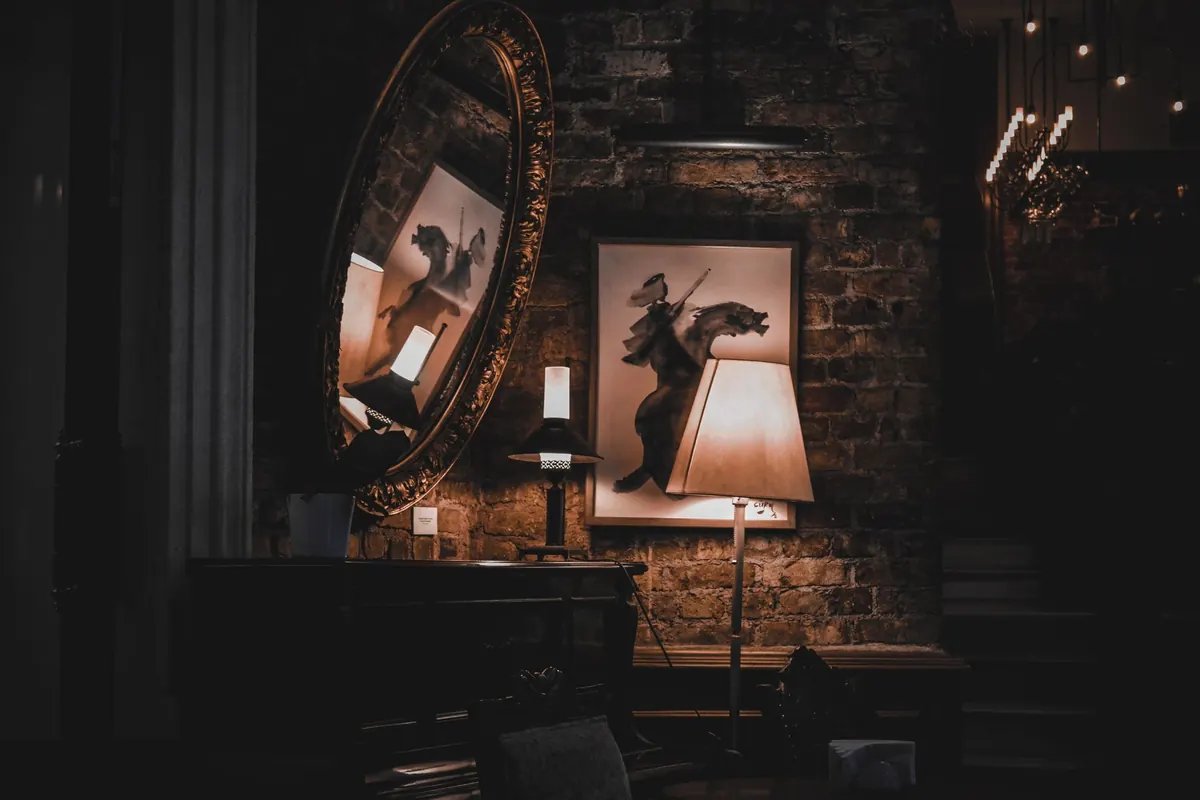
Start with a floor lamp or a wall-mounted reading light behind your shoulder. The shade should sit at about eye level when you are seated, so the light falls onto the page without shining in your eyes. A table lamp on a side table works too, but check that it does not throw a shadow from your hand. For ambient light, a second lamp on the other side of the room — perhaps on a sideboard or bookshelf — stops the corner feeling like a spotlight in a dark void. For atmosphere, a small lamp with a warm bulb, a candle or a string of low fairy lights in a glass jar can be enough. The goal is not to illuminate the room. It is to make the corner feel like its own small room within the room.
Bulbs, brightness and colour temperature
This is where north-facing rooms are won or lost. Look for bulbs around 2700K to 3000K. That is warm white, close to old incandescent light. Anything marked cool white, daylight or 4000K and above will fight the room and make it feel like an office. For reading, you want roughly 400 to 600 lumens at the page, though this depends on your eyes and the size of the print. A dimmable LED filament bulb gives you the look of an old bulb with modern efficiency.
If you cannot change your wiring, a plug-in dimmer or a smart bulb can soften the light after dark. In winter, dim the main lamp to about half and let the smaller lamps do
Photo: Alex Tyson / Pexels