September 18, 2026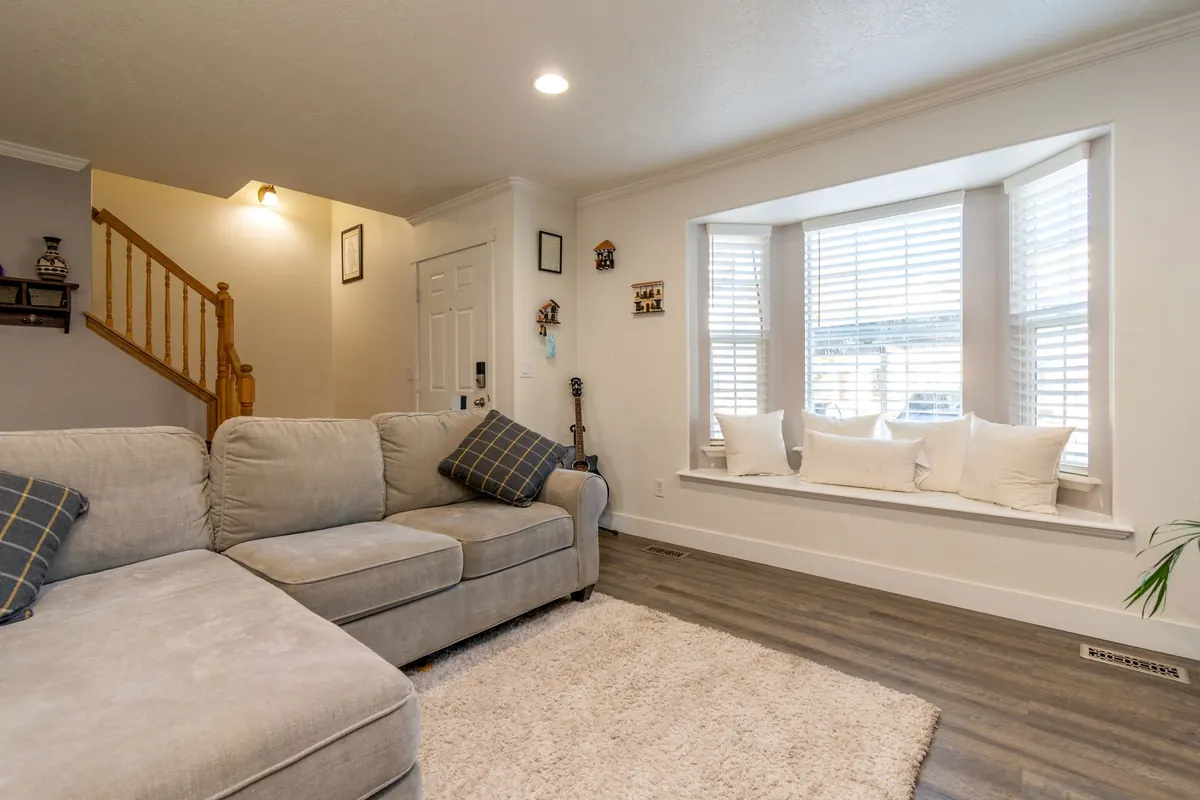
A reading nook is not a big project. It is a chair, a light, somewhere to rest a cup of tea, and a reason not to be interrupted. Get those four things right and the corner works. The rest is detail — but the detail is what turns a spot you sit in occasionally into the one you drift towards at nine o'clock without thinking about it.
What follows is the checklist I would work through in my own home, in roughly the order that matters. Buy the chair before the rug. Sort the light before the cushions.
Start with the chair, not the colour scheme
Most people buy the shelf and the rug first, then discover the chair is wrong. Sit in a chair for twenty minutes before you commit to it, ideally with a book in your hands rather than your phone.
What you are looking for: a back tall enough to lean your head against, armrests at a height where your forearms actually rest on them, and a seat depth that does not force your feet off the floor. If a chair is too deep, a firm cushion behind your lower back fixes it. Dining chairs rarely work — they are built for tables, not for an hour with a novel. Second-hand wingbacks and tub chairs are usually good value and forgiving of a throw.
A footstool matters more than people expect. Reading with your feet flat on the floor is fine for ten minutes; with your legs supported, you will stay for an hour. If you read with one hand holding the book, you need elbow support, which means armrests or a pile of cushions in your lap.
One note: if you get neck, shoulder or back pain when reading, speak to a physiotherapist or your GP rather than guessing at chair heights.
Layer the light — three lights, not one
Reading needs light on the page, not just light in the room. A single ceiling bulb will either be too dim to read by or so bright the rest of the room feels like a waiting area. Aim for three layers.
- Task light. An adjustable floor lamp or swing-arm wall light, positioned so the light comes over your shoulder rather than into your face. If you are right-handed, that means over your left shoulder; reverse it if you are left-handed. The shade should sit just below eye level when you are seated.
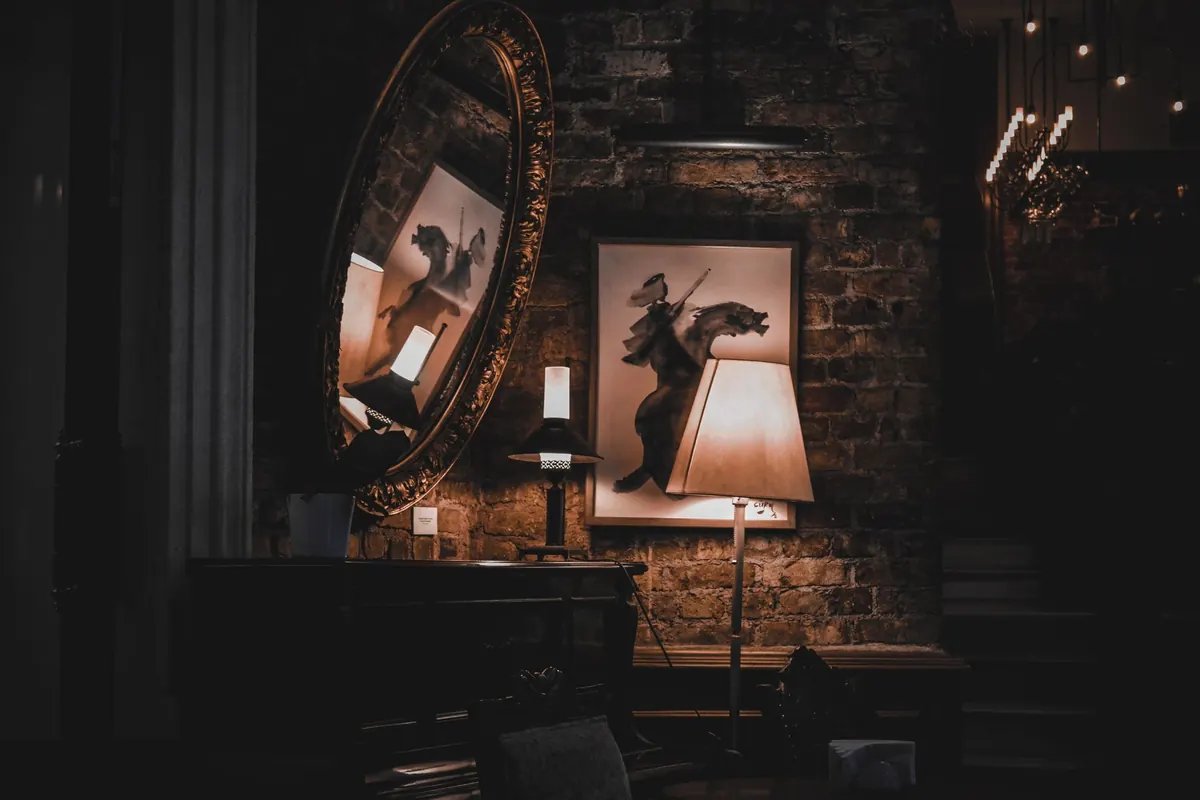
- Ambient light. A table lamp on a side table, or a dimmable ceiling fitting. Warm white bulbs — around 2700K — suit evening reading far better than the cooler white you would use in a kitchen or bathroom.
- Background light. Something low and soft elsewhere in the room, so the contrast between page and surroundings is not extreme. A bright lamp in a dark room tires your eyes faster than a gently lit one.
Daylight is worth using. Sit side-on to a window rather than facing it, and if the sun moves across your page in the afternoon, a simple roller blind gives you control without losing the room.
The side table, and what lives on it
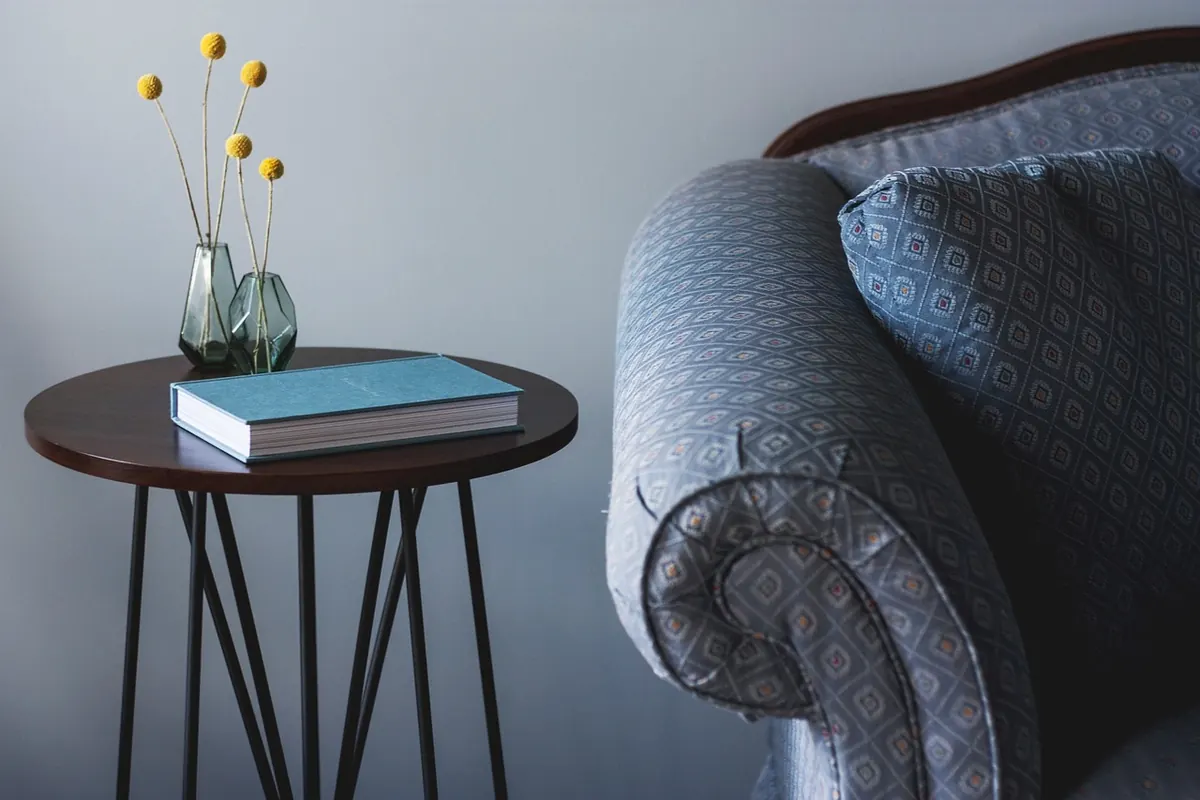
Height first: and armrest-height table is the target. Too low and you will lean awkwardly; too high and you will knock your mug. A round table roughly the size of a dinner plate is enough for a drink, a book and a pair of glasses. In a tight corner, a C-shaped table slides over the seat, and a wall-mounted ledge or a deep window sill does the same job without taking floor space.
Keep a small tray on the table to stop clutter spreading. On it: a coaster, two or three bookmarks, reading glasses, a pencil, and a notebook if you mark passages. A lidded cup is a sensible choice if you read near upholstery. If you use an e-reader, plan a charging point now — a socket behind the chair, or a small power bank in a drawer nearby.
Give blankets a home, not a heap
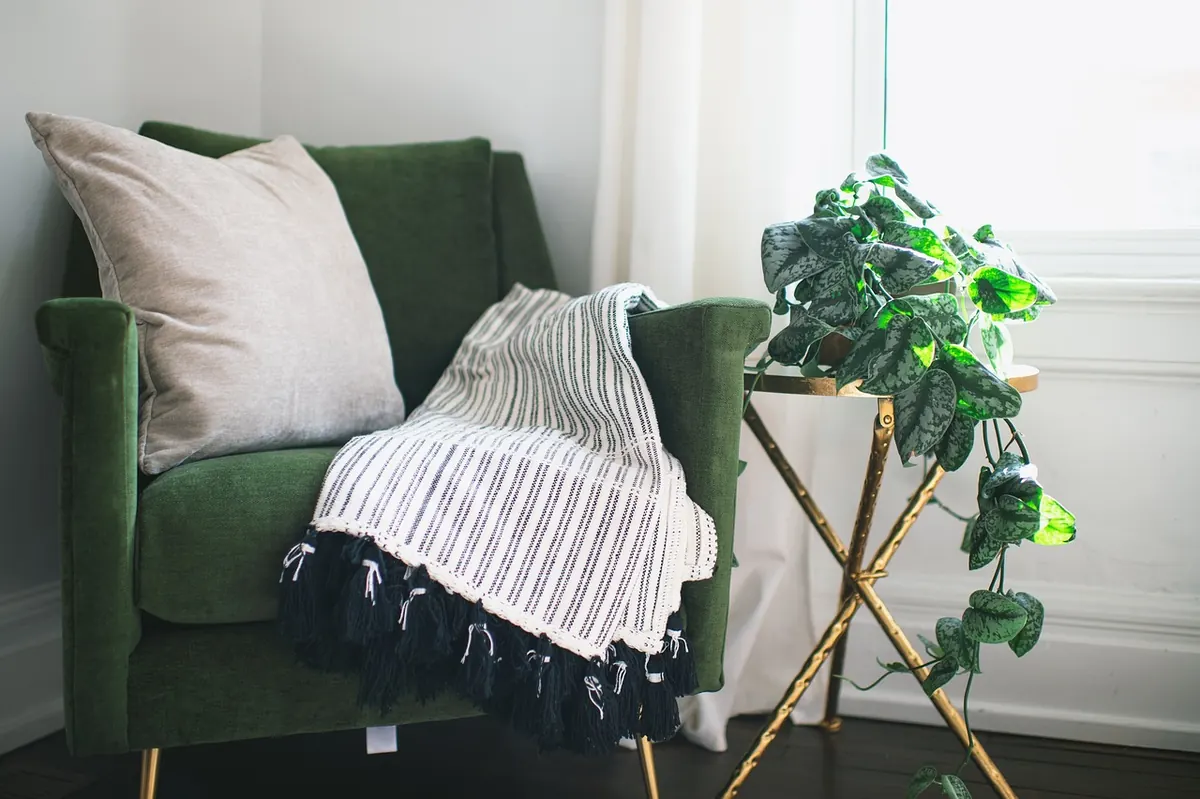
Throws end up draped over chair arms and look untidy within a week. Decide where yours lives before you buy it. A woven basket beside the chair, an ottoman with storage inside, a wall-mounted rail, or a lidded blanket box that doubles as a side table — all work. The key is that putting the blanket away takes one movement.
Wool and cotton breathe better than fleece and stay fresher between washes. Swap a light cotton throw in summer for something heavier in winter, and store the out-of-season one folded flat with a lavender bag or cedar block in a dry cupboard. Air blankets outside on a dry day now and then rather than washing them constantly.
Deal with noise before you deal with cushions
Sound is the most overlooked item on this list, and the hardest to fix later. Work out what you are actually hearing: traffic, a shared wall, a washing machine, or people moving through the room.
- A draught excluder at the bottom of a door and a curtain across a doorway cut a surprising amount of passing noise.
- A full bookshelf against a shared wall absorbs sound and gives you somewhere to put the books.
- Soft furnishings — a rug with an underlay, curtains, an upholstered chair rather than rattan or leather — reduce echo.
- For household noise you cannot control, keep earplugs or headphones in a small dish on the side table so they are never more than an arm's length away.
The twelve-point checklist
- A chair you have sat in for twenty minutes, with arm support.
- A task light with an adjustable arm, over your shoulder.
- A second, softer light for the rest of the room.
- A side table within reach at armrest height.
- A tray or dish for a drink, glasses and bookmarks.
- A throw within reach — and a basket for it to live in.
- A footstool, ideally one that stores something.
- A charging point for an e-reader or phone.
- Something soft underfoot: a rug, with underlay if you can.
- One measure against noise: door draught excluder, curtain or earplugs.
- A shelf or basket holding the next three books.
- A simple signal the nook is taken — the lamp switched on, the chair angled away from the room.
Fitting a nook into a small or shared room
You do not need a spare room. Good spots include the alcove beside a chimney breast, the space behind a sofa, a bay window, a wide landing, or the end of a hallway if it is not a walk-through. In a shared living room, a rug and a lamp do most of the work of marking out the nook as separate.
Keep the footprint light: a wall-mounted light and a floating shelf free up floor space, and a folding chair can be tucked away when guests arrive. In rented homes, plug-in wall lights and removable adhesive hooks mean nothing has to be drilled.
Living with it
A reading nook only earns its place if it is easy to use. That means the lamp switch is reachable without standing up, the blanket has somewhere to go in one movement, and the book you are reading stays there instead of migrating to the kitchen table.
Keep one clear spot for a current read, and once a month take everything else back to the shelves. Ten minutes of tidying keeps the chair available, and an available chair is the whole point. Start with the seat and the light this week; add the rest as you notice what is missing.
Photo: Get Lost Mike / Pexels